David Michael Kennedy

Who? Is that a rock star? No, he is not a rock star. He is not a guitarist, or piano player, or a drummer, or even a singer. In fact, I’ll bet you have never even heard of him. David Michael Kennedy is a photographer. So, why am I writing about a photographer in a story about rock and roll? Well, Kennedy has been very influential in the world of rock over the years. He has photographed many famous artists such as Bob Dylan, Bruce Springsteen, Muddy Waters, Debbie Harry (Blondie), and Charlie Daniels to name a few.

He is also very well known for taking photos for album cover art. His photos have been on the album covers of groups like Cheap Trick, The Charlie Daniels Band, Billy Idol, Georgia Satellites, and The Isley Brothers. Today’s story is about one of the groups that used Kennedy’s photograph for their album cover.

As the story goes:

The year was 1981, and a group of Canadian musicians by the names Mike Reno, Paul Dean, Doug Johnson, Scott Smith, and Matt Fredette were working on their second album. Only a year earlier in August of 1980 they had burst onto the music scene with a debut album, which hit #13 on the Billboard charts, titled “Loverboy”. That album cover featured a person dressed in all black standing in front of a red background, smoking a cigarette. Sound Familiar?

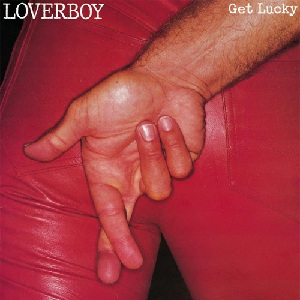
Well, for their second album, Loverboy hired David Michael Kennedy to take the cover photo. They had an idea to do a photo of a person’s back side in leather pants. Of course following the release of the second album, “Get Lucky”, both Dean and Reno wore red leather pants throughout the whole concert tour for the album. But which one wore the pants in the cover photo shoot, Reno or Dean?

There has been a lot of speculation about this over the years. On the one hand, Dean was known to turn his back to the audience in concert (and in videos) in his red leather pants and put his hand behind his back with fingers crossed just like on the album cover. But he was 35 years old and the pants he wore in concert looked more baggy than those in the cover picture. So, on the other hand, due to Dean’s baggy look, many people concluded that it was actually Reno on the cover. The mystery went on for more than twenty years until one day in an interview in 2012, Reno revealed the truth of the matter. You see, Kennedy’s stylist went out in search of red leather pants but was only able to find one pair in all of New York City that day. And, after returning with the pants it soon became clear that nobody in the group, or any of Kennedy’s models, were small enough to fit into them. So, it actually was neither Dean nor Reno in that cover photo.

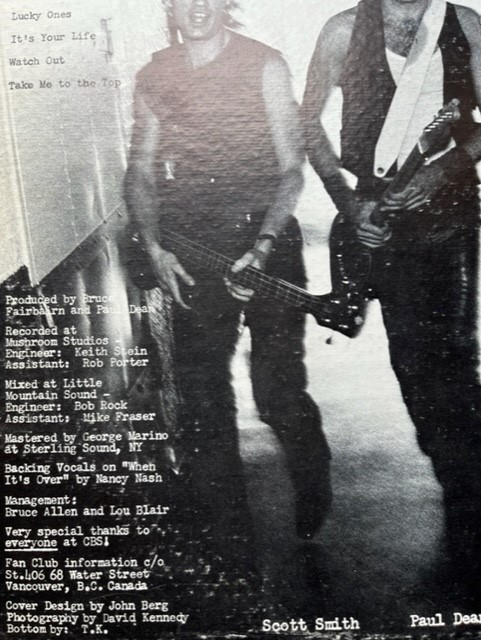
In 2014, Kennedy told an interviewer that later that afternoon, his 13 year old daughter, Tymara Kennedy, came home from school and saw the pants sitting there in the living room. She asked if she could try them on and sure enough, they fit. They then hired a six foot tall Argentinian male model who nobody even remembers the name of and photographed Tymara wearing the red pants with the crossed fingered hand of the male model posed right behind her. At the time the band decided to keep the identity if the pants wearer secret, so they put a credit on the back of the album that just read “Bottom by: T.K.”

Tragically, 10 years later Tymara was killed in a car accident. The cover of “Get Lucky” was the only time she ever modeled. She was very proud of that picture though, and it is said that it was her favorite picture in her house. Kennedy said that revealing the true identity of the wearer of the red pants was kind of a memorial to his daughter Tymara.

“Get Lucky” reached #7 on the Billboard album charts that year, and featured “Working For The Weekend” and “When It’s Over”. The cover was chosen as one of the 50 best Canadian album covers of all time. And from that point on, those red leather pants became Loverboy’s signature.

I hope you learned something today that you didn’t already know, but if not, that’s cool to. Come back and see me real soon right here at As The Story Goes.

https://www.youtube.com/watch?v=dsgBpsNPQ50
Back of album cover

Did you know that you can have my blogs delivered straight to your inbox? Just visit my home page and sign up. https://as-the-story-goes.com/home/
“Lady” – A Rock & Roll Love Song

By Brad Gallagher:

When I was growing up my father would frequently tell us jokes. These jokes were similar to what our society now refers to as “Dad Jokes”, but back then they were just humorous little stories that he told us over and over. Like the story about the little boy who ran into the kitchen one day and said to his mother, “Mom, I just saw a guy get hit in the ass by a speeding car.” Shocked by the little boy’s language, the mother, in order to correct him, said, “Rectum, Timmy!!” The little boy responded by saying, “Wrecked him Heck, Mom! It almost killed him”.

Another story he frequently told us was the one about a husband and wife who were sitting in a restaurant having dinner when a man approached the wife and said, “Hey Lady”. But before the man could say anything else, the husband jumped up out of his chair, point his finger at the man, and said, “Hey! That’s no Lady, that’s my wife!” Ha Ha, funny Dad,.

Now obviously this is just a joke, and there is probably not a single husband out there who would say that his wife is not a lady, but there are few husbands who have written songs about there wife. This is the account of one of those men.

As The Story Goes:

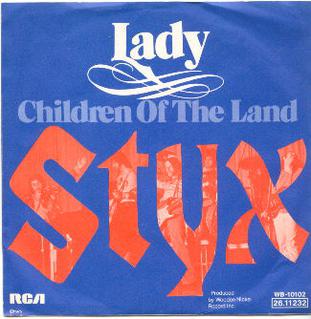
Way back in 1970, Dennis DeYoung, who is a singer, song writer, and founding member of the band “Styx”, married his high school sweetheart Suzanne Feusi. Two years later he wrote the song “Lady”, which is one of three songs he wrote about her during his career. Lady is a ballad/love song in which DeYoung tells about how just being in Suzanne’s presence makes him smile and how just the touch of her hand builds him up and makes all of his troubles fade away. He alludes to the thought that when they met, it was love at first sight. She was shy like a child then, but she was also everything he ever needed. It is a beautiful song which begins with a slow and gentle piano solo and then progresses as the rest of the band joins in.

This song is a true love story, but not everyone thought so at first. In fact, it was rejected by their record label, “Wooden Nickle”, when DeYoung tried to get it put on the first Styx album in 1972. The next year, in 1973, he tried again to get this song on an album, and was somehow successful, but only barely. It ended up being the second track on the “Styx II” album, but it did not get a warm reception from the critics or the fans. Apparently, the radio stations back then just didn’t know what to do with a love song that started out calm and then evolved into a full out rock and roll bombardment of drums, guitars, and tremendous vocals. So, most of them didn’t even play it.

It was also released as a single in 1973, but didn’t reach the charts. Then one day in 1974, a DJ from Chicago named Jim Smith heard it playing on a juke box in a pizza restaurant and immediately fell in love with it. Smith had a radio show that aired every Saturday night and reach audiences in 38 states and several foreign countries. He was determined to make “Lady” a hit, so he convinced his boss to let him play the song every night on his show. By 1975 it was the #2 most popular song on that radio station, and at the end of 1975 it was ranked as the 29th biggest hit on their year-end count down. Nationally it reached #6 on the Billboard Top 100 charts that year, and is credited with being the very first rock and roll Power Ballad.1

DeYoung is no longer a member of Styx, but to this day both Styx and DeYoung play “Lady” at each of there live concerts. In fact, after after making four albums with the Wooden Nickle label, Styx signed with A&M Records, and now “Lady” is the only Styx song produced by Wooden Nickle records that is still played live.

At the time of this post, Dennis and Suzanne DeYoung are still married, and in case you are wondering, the other two songs he wrote for her are “Babe” which reached #1 on the charts in 1980, and “The Best Of Times” which reached #3 in 1981.

Lady, by Styx: https://www.youtube.com/watch?v=uR4if4ble1A

Well, that is the story as I heard it. I can’t wait to see you again, so come back and visit me real soon right here on As The Story Goes.

Did you know that you can have my blogs delivered straight to your inbox? Just visit my home page and sign up. https://as-the-story-goes.com/home/
[1]  Dominic, Serene. “Power Me, Ballad Me: The Power Ballad Timeline”Detroit Metro Times. Retrieved 21 February 2022.

A Hitch-Hiker’s Story

By Brad Gallagher:

Hitch-Hiking. Does anyone even do that any more? Walking backward down the street facing the oncoming traffic with your right arm extended, your fist clenched, and your thumb sticking straight up in the air. You hope as you walk that a driver will stop and give you a ride either as far as you are going, or at least as far as they are going. Of course with the latter you need to start all over again once the car stops and try to catch another ride the rest of the way. It is not an easy way to travel, but back in the early 1980’s I did this quite often.

I graduated from high school in the late 1970’s and soon found myself in college. I didn’t have much money, and the bucket of bolts car I owned was constantly breaking down. I could hardly afford gas let alone repairs, so I relied on hitch-hiking more often than not for my transportation. Of course the world was a much safer place back then, especially around a small rural college town, so I wasn’t concerned about safety, and I got to meet quite a few interesting people. This is the story about one of those interesting people that I met while on the road.

As The Story Goes:

It was the spring of 1980 on a beautiful day in New England and I had been visiting my sister who lived two towns over from the college I attended. It was such a nice day, I had decided to walk the whole way to her house that morning. The walk wasn’t terribly long, in fact it only took about 45 minutes to get there. However, while visiting I completely lost track of time and suddenly realized that I had a class in half an hour. “Well Sis, I’ve gotta go” I said, and I started my walk back to the college at a faster pace than the walk there. As I walked I would quickly turned around and stick my thumb up in the air every time I heard a car approaching from behind. After about 15 minutes a little pick up truck slowed down and stopped right next to me.

I jumped in and sat down in the passenger seat next to the driver who looked to be about 10 or 15 years older than my father at the time. He said “Hi, where are you headed?” I told him I was headed back to the college, and ironically he was going to the college too. We had a little chuckle over that, and we started talking. “Small world”, he said. It turned out he was one of the professors who taught at the school, however we had never previously met, but I did have a few friends who were attending his classes.

We talked about the different people at the college that we both knew for a few minutes to pass the time during the drive, and after that topic had dried up he pointed to the cassette player in the dash and said “That’s my nephew”. The music had been playing so softly that up until that point that I hadn’t even noticed that it was on. My first thought when he said that was, “Wow, this guy thinks the cassette player is his nephew”. So, I just said “What?” He replied, “No, really. It is”.

So, I politely asked him who his nephew was, and he replied, “Boz Scaggs”. “Really??”, I said with probably a little too much astonishment. “Yes”, he said. “This is his newest album. It hasn’t even been released in the stores yet. He was visiting us over the weekend and he gave me a copy”. I was a fan of Boz Scaggs back then (and I actually still am). My brother had a copy of his previous album, “Silk Degrees”, and I loved it. Now I was listening to his newest album before it even hit the record stores. This was cool!

Once we arrived at the college I thanked him for the ride and went on to class. I don’t think I ever spoke with him again, but it was an experience that has stayed fresh in my mind for over 40 years. Now, I don’t know for sure if he was telling the truth or not, but then again, why would he lie to a hitch-hiker who he had never met before? I believe that his story was true. After all, how many people get to hear a famous artist’s music before it is release.

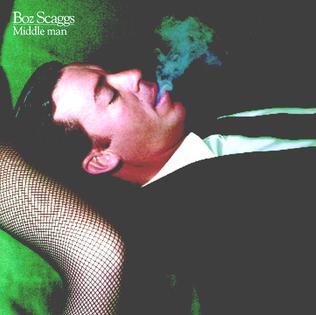
The album we were listening to was called “Middle Man”. It was released in April 1980 and it peaked at #8 on the Billboard top 200 album charts that year. I don’t recall which songs from the album played on that cassette player during our brief journey together, but I like to believe I heard “JoJo” and “Breakdown Dead Ahead” (the two biggest hits from the album). One of which reached #15, and the other #17 on the Billboard Top 100 charts. That would be super cool if I really did hear the album’s two biggest hits in that truck that day, but at that point, of course, I wouldn’t have even known that they would become hits. What I do know is that it was a once in a lifetime experience to catch a ride with the uncle of Boz Scaggs.

Listen to JoJo – click here – https://www.youtube.com/watch?v=xi-GDD8yFyo

Listen to Breakdown Dead Ahead – click here – https://www.youtube.com/watch?v=yQ0r4Zg7h2c

Well, thank you for reading my ramblings about a day in my life many years ago. And come back and see me very soon right here on As The Story Goes.

Did you know that you can have my blogs delivered straight to your inbox? Just visit my home page and sign up. https://as-the-story-goes.com/home/
Running On Empty – Live Album

By: Brad Gallagher

Yeah, we’ve all been there haven’t we? We are driving along and out of nowhere we hear that dinging sound informing us that we are almost out of gas. And, back in the 1970’s our cars didn’t even make that dinging sound. We had to actually keep an eye on the fuel gauge and fill up before we were completely out of gas. But we didn’t always pay close attention and we would sometimes suddenly notice that the little needle was pointing directly at the capital “E” on the gauge. Panic would set in and we would begin to desperately search for a gas station, hoping the engine would continue to run until we found one.

Or worse yet, this would happen on one of those limited access highways just as we were passing a sign that read “NEXT EXIT 30 MILES”. At that point we would go into survival mode and start feathering the gas peddle, hoping that there was enough gas left in the tank to make it that far. And, of course, praying that there would be a gas station at the next exit once we got there.

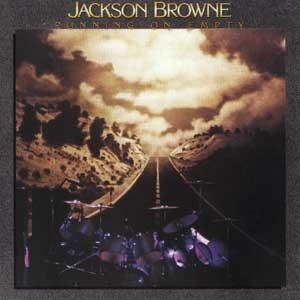
Jackson Browne was no different than any of us who have had this wonderful experience. And, it was his personal experience with being low on fuel that inspired his song, “Running On Empty”. You see, he wrote the song while making the album “The Pretender”. During that time he was driving back and forth to the studio on a daily basis in a car that was perpetually on empty. In an interview with Rolling Stone Magazine he said, “I was always driving around with no gas in the car, I just never bothered to fill up the tank because — how far was it anyway? Just a few blocks.”1 Of course it is not just the name of a song, but also the name of of his fifth album, and that album is what I want to tell you about today.

As The Story Goes:

In the 1970’s rock artists worked so tirelessly to release album after album, that many would take a breather from the studio by recording one of their concerts and releasing the recording as a live album. This would give them the break they needed while still providing the fans with a new album to buy. Jackson Browne had released four albums in five years during the early 70’s while keeping up a busy concert schedule. So, he decided to make a live album, however, he gave it a twist.

All ten of the songs on the album were recorded while on tour, but only a few were recorded on stage in concert. The first song, “Running On Empty”, and the last song “The Load-Out/Stay” were recorded in concert at the Merriweather Post Pavilion in Maryland on August 27, 1977. “You Love The Thunder” was recorded on stage at The Garden State Arts Center in New Jersey on September 6, 1977, and “Love Needs A Heart” was recorded on stage at The Universal Amphitheatre in California on September 17, 1977.

“The Road” which is the second song on the album, was recorded partially in room 301 of the Cross Keys Inn in Maryland on August 27, 1977, and partially in concert at The Garden State Arts Center in New Jersey on September 7, 1977. The third song on the album, “Rosie”, was recorded back stage in a rehearsal room at Saratoga Performing Arts Center in New Jersey on September 1, 1977. And “Cocaine”, the last song on the first side, was recorded in room 124 at the Holiday Inn in Edwardsville, Illinois on August 17, 1977.

“Shaky Town”, which is the first song on the second side of the album, was also recorded in room 124 of that Holiday Inn in Illinois on August 18, 1977. But the most intriguing recording on the album, in my opinion, is the song “Nothing But Time”. This song was recorded on their tour bus while driving through New Jersey on September 8, 1977. The drummer, Russell Kunkel, played the snare and the hi-hat, and used a cardboard box with a foot pedal as the bass drum. And, if you listen carefully to the song you can hear the bus driver shifting gears and accelerating part way through it.

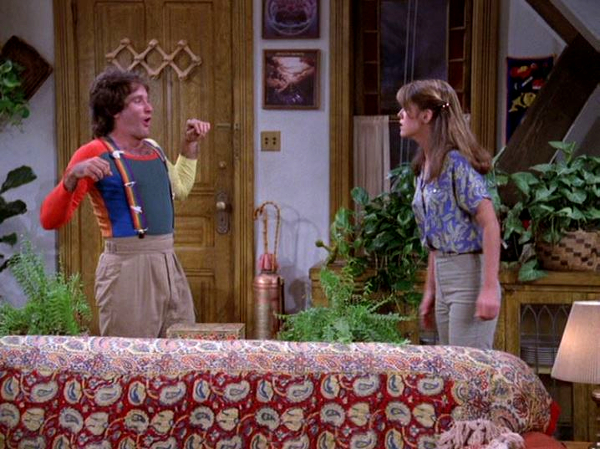
Running On Empty was Jackson Browne’s first live album, but unlike other live albums of that era, every song was a brand new song that had never been recorded before. This was the first ever live rock album that featured all new songs. And it was a hit. It reached #3 on the Billboard pop album chart in 1978 and remained on the charts for 65 weeks. The song “Running On Empty” reached #11 on the Billboard pop singles chart, and “The Load-Out”/”Stay” reached #20. Also, as a side note, a framed copy of the album cover was hanging on the wall in Mindy’s apartment on the 1970’s sit-com “Mork & Mindy”.

And you didn’t think you would learn something new today, did you? That’s all for today. Come back and see me real soon on As The Story Goes.

Click here to watch the video https://www.youtube.com/watch?v=zdHg4QEmBvk

Did you know that you can have my blogs delivered straight to your inbox? Just visit my home page and sign up. https://as-the-story-goes.com/home/
(1)  Rolling Stone“500 Greatest Songs of All Time”

Apple Scruffs

By: Brad Gallagher

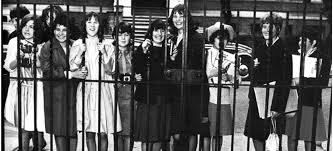
Have you ever heard of an Apple Scruff? According to legend, “Apple Scruff” was the term give by George Harrison of the Beatles to describe female groupies that used to hang around outside their studio, and the Apple Records headquarters, and even the band members’ homes waiting for the band members to emerge. They were more than just the regular crazy Beatlemania fans though. In fact, they were said to be organized to the point of having a membership hierarchy and they even carried Apple Scruff membership cards. Their self appointed purpose was to see the members of the Beatles as they went to and fro and hopefully interact with them, while at the same time protect them from the normal run of the mill fans.

Over the years several of these scruffs became friends with the members of the Beatles, and a couple of them actually became employees of Apple Records. This is the story of one these Apple Scruffs and what she did to have a song written about her.

As The Story Goes:

One day back in the 1960’s, several of the Apple Scruffs were hanging out at Paul McCartney’s house in London when they noticed that a window was partially open on the second floor. So, they decided to break in. In a 2005 interview one of the girls named Diane Ashley said: “We were bored, he was out and so we decided to pay him a visit. We found a ladder in his garden and stuck it up at the bathroom window which he’d left slightly open. I was the one who climbed up and got in.”1

After getting in the house she went to the front door and let the others in. Most of them went into the house simply for the experience, but a few of them stole things from the house such as articles of clothing and pictures. Though most of the stolen items had little value, one of the pictures was irreplaceable. It was a photo of Paul’s father. Fortunately one of the girls, Margo Bird who was Paul’s dog walker and later an Apple Records employee, knew who had taken it and was eventually able to recover it.

A few years later in 1968, while on a promotional trip to New York, Paul wrote a song about the incident titled “She Came In Through The Bathroom Window”:

“She came in through the bathroom window
Protected by a silver spoon
But now she sucks her thumb and wanders
By the banks of her own lagoon

Didn’t anybody tell her?
Didn’t anybody see?
Sunday’s on the phone to Monday
Tuesday’s on the phone to me

She said she’d always been a dancer
She worked at fifteen clubs a day
And though she thought I knew the answer
Well, I knew what I could not say

And so I quit the police department
And got myself a steady job
And though she tried her best to help me
She could steal but she could not rob

Didn’t anybody tell her?
Didn’t anybody see?
Sunday’s on the phone to Monday
Tuesday’s on the phone to me
Oh yeah”

The lyrics do not seem to be entirely about the break in, but some of the lines are directly connected. The line “Protected by a silver spoon” for instance in the first verse is said to be a reference to Ashley’s influential family who were able to keep McCartney from pressing charges. And then in the song’s chorus, apparently there was a police officer whose last name was Sunday who called a producer named Billy Monday to report the break in. And a neighbor named Tuesday Weld who called Paul to tell him. Also, it is unclear if Ashley really was a dancer. There is rumor though that the second verse is just some sort of inside joke.

The third verse, however, was written in a taxi cab in New York. During the cab ride, Paul noticed the cab driver’s ID which read “Eugene Quits, New York Police Dept”. He must have been moonlighting as a cab driver, but when Paul saw the ID he immediately grabbed his guitar and wrote that verse.

McCartney originally titled this song “Bathroom Window”, but later decided to use the entire first line as the title. It was released in 1969 on the Abbey Road album as a part of a 16 minute long – 8 song medley that ends the second side of the album. Abbey Road spent 11 weeks at number one on the US Billboard charts, but the Beatles never released this song as a single. Joe Cocker, however, did release it as a cover in 1970 and it went to #30 on the Billboard top 40 chart.

So now you know about the Apple Scruffs and their antics that lead to a hit song. Tell your friends. Tell your family. And come back and see me really soon right here on As The Story Goes.

Did you know that you can have my blogs delivered straight to your inbox? Just visit my home page and sign up. https://as-the-story-goes.com/home/
[1] Turner, Steve (2005). A Hard Day’s Write: The Stories Behind Every Beatles Song (3rd ed.). New York: Harper PaperbacksISBN 0-06-084409-4

Everybody Must Get Stoned

By: Brad Gallagher

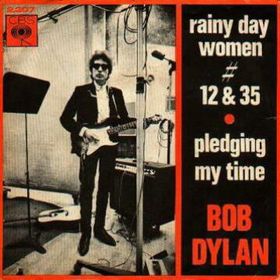
Every Body Must Get Stoned was one of Bob Dylan’s biggest hit songs, topping out at #2 on the Billboard Top 100 charts in 1966. But did you know that it actually had a different title? The official title of this song is “Rainy Day Woman #12 & 35”. Of course if you are familiar with this song you know that the title is not found anywhere in the lyrics of the song. You also know that there has been quite a bit of controversy about the song over the years, mostly due to the concept of getting stoned. Or, maybe you didn’t know that.

As The Story Goes:

As soon as this song was released, it was labeled a “Drug Song” due to it’s repeated lyric, “Everybody Must Get Stoned.” The title of the song is said to have come about one rainy day when a woman and her daughter walked into the recording studio while Dylan and the band were recording. Dylan looked at them and, believe it or not, correctly guessed their ages. The mom at 35 years old and the daughter at 12 years old. Ironically, if you multiply 35 times 12 you come up with the number 420 which is the number traditionally associated with smoking pot. Is this just coincidence? In addition, according to common drug lingo, a “rainy day woman” refers to a marijuana cigarette. But is this song about drugs?

Bob Dylan himself stated “I never have and never will write a drug song”.1 Also, the origin of associating 420 with smoking marijuana dates back to 1971, when a group of high school students in California regularly met at 4:20 in the afternoon to get high. It was their perfect time, because school had let out for the day but their parents had not come home from work yet. Of course, Rainy Day Woman #12 & 35 was written 6 years prior to the origin of “420”. However, the term “getting stoned” dates back to the 1930’s. So maybe Everybody Must Get Stoned isn’t about drugs, But if not, what is this song really about?

Dylan maintains that it is Biblical in origin. One version of the story claims that Dylan recognized that we are all sinful people and we all deserve to be stoned as punishment for our sins. Stoning being a common form of capital punishment in Biblical times. Another version of the story reflects on the story of Stephen in the book of Acts in the Bible. Stephen was stoned by the authorities for being outspoken about his beliefs. Dylan felt as if he were being stoned by the critics for his song lyrics and his music style.

So, drugs or not drugs? Which version of the meaning of the song is the true meaning? It could go either way, but I’ll leave that up to you to decide. And when you do, let me know which story you believe. I’ll see you next time on As The Story Goes.

Did you know that you can have my blogs delivered straight to your inbox? Just visit my home page and sign up. https://as-the-story-goes.com/home/

[1] “Dylan View On The Big Boo”, Melody Maker, June 4, 1966

The 27 Club

By: Brad Gallagher

There are many numbers which our minds associate with items, concepts, or events. Numbers such as the number 13, which is traditionally associated with bad luck, or 21, the number required to win at black jack. 53 is the number of cards in a standard card deck, and 50 is the number of states in the United States of America. There are also numbers associated with rock music, like the Beatles’ songs “Revolution Number 9” and “8 Days a Week”, and of course Tommy Tutone’s classic “867-5309”. But there is one number associated with music that holds a very ominous meaning. The number “27”.

As The Story Goes:

The number 27 has for years been a part of rock and roll folk lore. You see, there have been quite a few music artists over the years who have passed away at the age of 27. Enough in fact that there are many people, both within the music community and outside the music community, who believe that these deaths are more than just coincidences. After all, 27 is a rather young age to die when the average life span is almost 79 years old. There are many theories as to why so many artists died at 27, from complex mathematical or scientific theories all the way down to simple theories based on how many of them owned white lighters (believe it or not).

The first musician ever recorded to have died at 27 was actually a composer who died way back in 1892. His name was Alexandre Levy. And there were many more as time went on such as Louis Chauvin, a ragtime musician who died in 1908 at 27 years old. And Robert Johnson, a Blues singer who dies at 27 years old in 1938. But for our purposes I want to focus on some of the more prominent musicians who made their mark on rock and roll and pop music.

On July 3, 1969, Brian Jones, a founding member and guitarist for the Rolling Stones died of drowning in a swimming pool. He had battled drug addiction for several years prior, which may have been a factor in his death, but the coroner’s report just listed it as “death by misadventure”. The next year on September 30, 1970, Alan Wilson, who was the lead singer and composer for Canned Heat died of a drug overdose. Some say that it was a suicide, but there was never any proof. Even though he was found alone, he did not leave note, and there were pills left over when he was found. The official autopsy just stated that his death was accidental.

Over the next ten months, three more famous musicians died at the age of 27. Jimi Hendrix, who died of asphyxiation due to a drug overdose on September 18, 1970. Janis Joplin, who died on October 4, 1970 from a drug overdose. And Jim Morrison, who died of heart failure in a hotel room in Paris on July 3, 1971. However, there were rumors that Jim Morrison’s death was also due to a drug overdose.

As time went by, many more famous musicians passed away at 27 years old, like Ron Mckernan, a founding member of the Grateful Dead who died of a gastrointestinal hemorrhage due to alcohol abuse on March 8, 1973. And Pete Ham, the leader of Badfinger, who committed suicide on April 24, 1975. And of course, who can forget Kurt Corban, the founder and lead singer of Nirvana, who took his own life by suicide on April 5, 1994. And Amy Winehouse who died of alcohol poisoning on July 23, 2011.

And the list goes on. In all, there are over 60 notable musicians who passed away at the age of 27. Not to mention the many more famous 27 year olds who were noted for accomplishments other than music, such as famous actors Anton Yelchin or Jonathan Brandis. Whether the number 27 really has any control over life and death is up for debate, but you have to admit that it is quite the coincidence.

Below is a mural on a wall in Tel Aviv depicting a few of the more famous members of the 27 club.

So go tell your friends. See how many know the story, and come back and see me real soon right here on As The Story Goes.

Did you know that you can have my blogs delivered straight to your inbox? Just visit my home page and sign up. https://as-the-story-goes.com/home/

The best decade for music – 1980’s!

By guest writer: Shari Gallagher

Let me take you back to the early 1980’s when I was a teenager and just getting into pop music that was playing on the radio. My older brother was into hard rock/metal bands so when he drove me to and from school in his souped-up red Toyota truck, he blasted Nazareth, AC/DC, Ozzy Osbourne, Black Sabbath, Judas Priest, and Def Leppard, to name a few of his favorites. It was a great time for music – really the best decade if you ask me. As I aged a few years and chose my own music to listen to in my blue Nova or on my Walkman, I stayed true to some of the hard rock bands (AC/DC, Guns & Roses, and Def Leppard) but also learned that I like more of a variety of style, including Tom Petty, Journey, Blondie, Cyndi Lauper, and Peter Gabriel.

Fast forward to today…married for over three decades, three grown kids, and three grandkids! Now, we have any type of music choice at our fingertips, whether it be in our car, on our smartphones, or on TV. You know what, though??  I am still drawn to the same music I loved in the 80’s! Each song takes me back to a specific memory or event. I love that about music, don’t you?

One song from the 80’s, “Sweet Child of Mine” by Guns & Roses, makes me smile every time I hear it. This song is such a perfect blend of rock, with the guitar riffs, and lyrical melody. I started wondering who this “sweet child” really was and what it meant to this band.

As The Story Goes…..

Guns & Roses lead vocalist, Axl Rose, wrote this song for his girlfriend, Erin Everly (daughter of singer Don Everly of the Everly Brothers). She was about five years younger than Axl, and he loved the way she portrayed love, happiness, and a fresh start — something that he did not often experience in his own childhood. It has been said that Axl was inspired by Lynyrd Skynyrd’s style of authentic and sincere lyrics when he wrote this song, which makes me like this song even more since I am a huge fan of Skynyrd.

“Sweet Child of Mine” was the third song Guns & Roses released in the late 80’s; and it was their only song that made it to the #1 spot on the Billboard Hot 100.

When I listen to this song, I reflect on how blessed and grateful I am for my husband, our kids, and our sweet life together. Time sure flies, doesn’t it? Cherish the time you have with your loved ones and be thankful for the promise of each new day.

So now you know something about rock music that you probably didn’t know before. Go tell your friends, and come back and see us real soon right here on As The Story Goes.

Did you know that you can have my blogs delivered straight to your inbox? Just visit my home page and sign up. https://as-the-story-goes.com/home/
Who Can It Be Now?

By: Brad Gallagher

The unforgettable song by Men At Work that hit the number one spot on the Billboard Top 100 chart in October 1982. Who can forget that captivating saxophone solo that introduced the song? It hooked us as listeners and made us continue listening. Then, lead singer Colin Hay began to sing that question that we all wanted an answer to. “Who can it be knocking at my door?” The song itself doesn’t tell us who it was, but the back story does shed some light.

As The Story Goes:

Men at Work began as just two members, Colin Hay and Ron Strykert. Their first few years together were spent playing pubs in Australia as they tried to become successful. During that time they were the epitome of the struggling artists, living day to day and wondering how they were going to make ends meet. Until one day when an employee of CBS records heard them play, and decided to sign them.

But during those years prior to being signed, Hay lived in an apartment in St Kilda, Victoria, which at the time was a bit of a questionable area. So, he and his girlfriend would often escape to New South Wales were they had a tree house out in the bush were they would sit and write words and music. It was on one of those days in 1979 while in their tree house that he wrote the music for the song. It wasn’t until a couple years later, however, that he wrote the words.

You see, that apartment in St Kilda was located right next door to a drug dealer’s apartment. And apparently, people frequently mistook his apartment for the apartment of the drug dealer, and would knock on his door by mistake. He got to the point were he was afraid to even answer the door when someone knocked. He never knew if it was one of his friends, or someone looking to buy drugs. And sometimes, even his friends were just there asking for money that he didn’t have. So, he stopped answering the door entirely and sat down and wrote the words to the song “Who can it be now?”

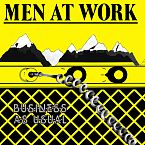
It was the first track on Men At Work’s debut album, “Business As Usual”, which was #1 on the Billboard Top 200 album charts for an amazing 15 straight weeks. The single went to #2 on the Australian charts, and in July of 1982 it hit #8 on the Canadian charts. Shortly after that, Fleetwood Mac signed Men At Work as their opening act, and by the end of October 1982, “Who Can It Be Now” was the #1 single in the US.

So now you know the story as I heard it. Don’t be shy, go tell a friend. And come back and see me real soon right here on As The Story Goes.

Did you know that you can have my blogs delivered straight to your inbox? Just visit my home page and sign up. https://as-the-story-goes.com/home/
The Heart Of Rock and Roll

By: Brad Gallagher

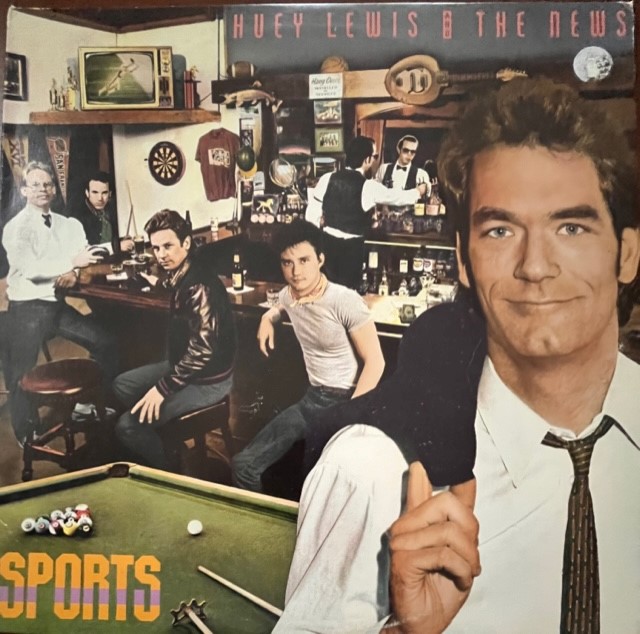
We all know the song by Huey Lewis and the News off their third album, “Sport”, titled “The Heart Of Rock And Roll”. We all just love it’s heart beat intro and fade out. What brilliance. It has a great back beat, and a really cool saxophone solo by Johnny Colla, not to mention tremendous vocals, and it even mentions my home town of Philadelphia, “The Liberty Town”. But did you know that “The Heart of Rock and Roll is Still Beating” were not the original words of the song.

As The Story Goes:

Back in the early 1980’s there was a lot of banter within the rock industry about what city had the best rock scene. Of course, whichever city any particular rock artist was from was the best rock city in their own mind.

Artists from New York claimed that their town had the best music scene. They had that cool “modern music” that they played “with a lot of style”. And of course, as Lewis said, “where else can you do a half a million things all at a quarter to three”?

And artists from Southern California who played “that hard rock music” believed that their music scene was the best in the country. After all, they had the sunset strip and the neon lights, and they played their music with a “lot of flash”.

Bands form all over the country, “DC, San Antone and the Liberty Town, Boston and Baton Rouge, Tulsa, Austin, Oklahoma City, Seattle, San Francisco, too” all claimed that their city was the best rock city in the country.

And, Huey Lewis was no different. Being from San Francisco, he maintained that San Francisco was the country’s best rock city. After all, San Francisco was the home of artists such as of The Grateful Dead, Cream, and Jimmy Hendrix. At that time, however, the gurus of the music industry all said that Cleveland actually had the best rock scene in the country. But Lewis could not bring himself to believe that Cleveland was the best rock and roll city in the country. After all it was just a small city in Ohio that really wasn’t known for much of anything. Until one night in 1981 while performing there. And even though Lewis had always refused to believe it, he changed his mind during that first evening’s performance.

That first night playing in Cleveland, they received such a great response from the crowd that they actually agreed that the fans in Cleveland were the best fans in the country. Coupling that with the beauty of the city and it’s gorgeous skyline, the next morning as the band was talking about the previous night’s show and the energy and passion of the crowd, Lewis said, “The heart of rock and roll is in Cleveland”. And then he went on to say, “That would be a great title for a song.”(2) Fortunately, as time went on, the other members of the band convinced him that “The Heart of Rock And Roll is in Cleveland” was not really a good title, so they changed the words to what we know today, “The Heart of Rock And Roll is Still Beating”.

The song topped out at #6 on the Billboard charts in 1983, and the album, “Sports”, reached #1 on the Billboard top 200 in June of 1984.

So keep your rock and roll heart beating and come back and see me real soon right here on As The Story Goes.

 (2) Reader, Adam (December 26, 2020). Huey Lewis on the Story of 80s hit “The Heart of Rock and Roll” from SportsProfessor of Rock. YouTube. Archived from the original on 2021-12-20.

Did you know that you can have my blogs delivered straight to your inbox? Just visit my home page and sign up. https://as-the-story-goes.com/home/