WHO IS BRUCE ANYWAY?

By: Brad Gallagher

Have you ever listened to the song “Don’t Bring Me Down” by the Electric Light Orchestra and gotten to the chorus and heard them sing “Don’t bring me down – Bruce”? And at that point have you ever wondered to yourself, “Who is this Bruce guy they keep singing about?”

As the story goes:

Bruce is not a member of the band, or the sound guy, or even a friend or relative of someone in the band. No, actually Bruce doesn’t even exist. But, he also is not a fictitious person. Bruce is not any type of person, either real or imagined.

When it comes right down to it, after all those years of listening to the song and singing along with it with our friends, we actually just had the lyrics wrong. The name “Bruce” is not even in the lyrics of the song.

You see, back in the 70’s it was very common to say the word “gross” when describing something disgusting or undesirable. Over the years the most popular story was that Elo decided to add the word “gross” to this song because they felt that to “bring me down” would be gross. So they added it, and also rolled their “R” when they sang it. So, when we as listeners heard the song, we heard the name Bruce instead of the word gross, and we have been singing “Bruce” ever since.

Now that being said, there is another version of the story. I recently heard an interview with Jeff Lynne, the leader of ELO, and he told the story differently. According to Lynne, he added the word during a rehearsal. There was a gap in the song after the words “Don’t bring me down”, and he spontaneously shouted the word “Grusse”. Lynne said in the interview that the German word grusse is a greeting, like Hi!, or Hello!. So he was simply filling the gap by saying Hi! to the audience in German.

Which of these stories is true? Well, you can decide for yourself. And tell your friends so they can decide for their selves which story to believe. And come back and visit me real soon. Because if you don’t, that would bring me down.

Did you know that you can have my blogs delivered straight to your inbox? Just visit my home page and sign up. https://as-the-story-goes.com/home/

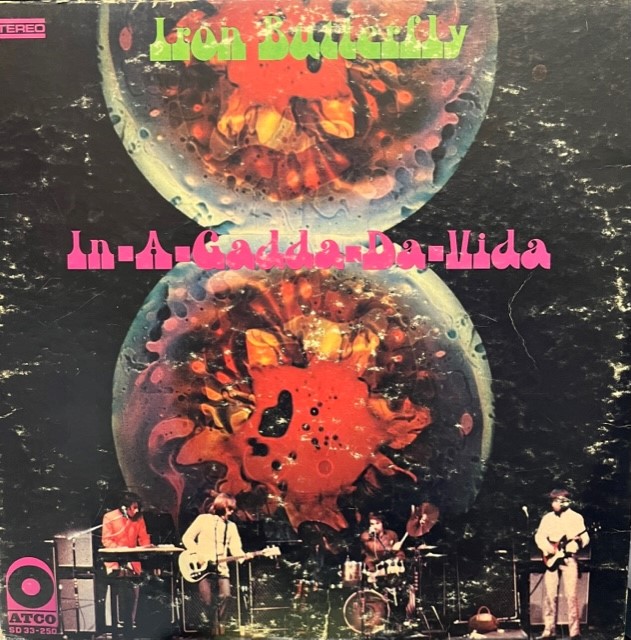
In-A-Gadda-Da-Vida

By: Brad Gallagher

Iron Butterfly’s iconic 1967 rock song. At 17 minutes and 5 seconds long, it took up the entire B side of their second album. It is said to be the second longest song in rock and roll history. Only Rush produced a longer song. But what does it mean? Is it an old Italian phrase, or maybe Latin? The album producers thought that it sounded like something from an eastern religion. After all, many rock artists, like the Beatles and the Rolling Stones, were experimenting with eastern religions back in the late 60’s. But no, it is nothing like that. In fact, it is much more simple.

As The Story Goes:

Doug Ingle, the lead singer and keyboard player of Iron Butterfly wrote the song. Ingle’s father was a church organ player, which may have contributed to his use of the long drawn out organ riffs throughout the song. And, his connection with the church was most likely where he got the idea for the song in the first place. You see, In-A-Gadda-Da-Vida is a love song. In particular, it is love song sung by the first man, Adam, to the first woman, Eve.

In a gadda da vida, honey
Don’t you know that I’m lovin’ you
In a gadda da vida, baby
Don’t you know that I’ll always be true

Oh, won’t you come with me
And take my hand
Oh, won’t you come with me
And walk this land
Please take my hand

There are a total of 30 words in the whole song, and after composing it, Ingle played it for drummer Ron Bushy who wrote down the words that Ingle sang. Now, as the story is told, Ingle had consumed a gallon of red wine while composing the song that night. And when he played it for Bushy, he was so intoxicated that his words were almost unintelligible. It turns out that Ingle was singing “In the garden of Eden, honey”. But Bushy heard “In a gadda da vida, honey”, and that is what he wrote down.

Ingle had never intended for the song to run for 17 minutes either, but one day while the band was waiting in the studio for their producer, Jim Hilton, to arrive, they played it to pass the time. As they played the song, it turned into a regular jam session. Little did they know that their recording engineer, Don Casale, had the tape rolling the whole time. When they were done, Casale played it back for them. The recording had a few mistakes in it, but it sounded so good to the group that they decided not to do another take, and that recording is what is on the album. All 17 minutes and 5 seconds of it.

So if you have a chance, download In-A-Gadda-Da-Vida, or better yet, find an original copy on vinyl and listen to it as loud is you can. If you listen carefully you might even be able pick out a few of their mistakes. And from time to time throughout the song you can even hear them talking in the background.

And come back and see me real soon here on As The Story Goes.

Did you know that you can have my blogs delivered straight to your inbox? Just visit my home page and sign up. https://as-the-story-goes.com/home/

Rikki…Don’t Loose That Number

By: Brad Gallagher

What number? What exactly was the number that Rikki was not supposed to loose? Maybe a social security number, or a locker combination number, or maybe even a street address? Some rumors say that the number was actually a slang word for a marijuana joint. And the line in the song, “send it off in a letter to yourself” was thought, at the time, to be a safe way to transport ones pot, back before the post office got rid of general delivery mail. And who in the world was Rikki anyway?

As The Story Goes:

Steely Dan’s two founding members, Donald Fagen and Walter Becker, met in the late 1960’s at Bard College. Both were students there, and musicians who shared a similar love for Jazz and R&B music. After graduating, the two began a partnership as song writers and attracted the attention of several music producers. One of those producers was Gary Katz of ABC records. Katz liked their work so much, that he hired the duo as song writers for the his label. It was also Katz who suggested that Fagen and Becker start their own group, and with the addition of guitarist Denny Dias, guitarist Jeff Baxter, drummer Jim Hodder, and singer David Palmer, the group became Steely Dan.

Rikki was never a part of Steely Dan, however. In fact, Rikki was actually on the scene long before the group began. Rikki’s father was a college professor at Bard college in Annandale New York and Rikki grew up there on campus. So naturally when it was time for her to attend college, she chose Bard college. While at Bard, she met and married professor Guy Ducornet. A year after she graduated Donald Fagen enrolled and the two met while he was in one of professor Ducorents classes.

One night at a party that they had both been invited to, Fagen approached Rikki. He was attracted to her, and even though he knew that she was married and expecting her first child, he didn’t hesitate to flirt with her. As the night went on and Rikki decided to go home, Fagen gave her his phone number. He told her not to loose it, and to call him any time she wanted. It wasn’t, however, until a few years after the party that Fagen and Becker actually wrote the song about the encounter, “Rikki Don’t Loose That Number”.

Rumor has it that later in her life Rikki told an interviewer that she almost called the number, but in the end decided not to. She also said to the interviewer, “Philosophically it’s an interesting song; I mean I think his ‘number’ is a cipher for the self.”[1] But Fagen always maintained that it was nothing more than a simple love song.

“Rikki Don’t Loose That Number” went on to become Steely Dan’s biggest hit. It was featured on their 1974 album, “Pretzel Logic”, and as a single it hit #4 on the Billboard Top 100 charts that summer.

So cue up your turntable and listen to “Rikki Don’t Loose That Number” one more time. And while you are at it listen to “My Old School”, which is said to be about a drug bust at Bard college back in 1969 while both Fagen and Becker we still students there. And come back and see me real soon here on As The Story Goes.

 [1] Steven Moore, “Reveries of Desire: An Interview with Rikki Ducornet,” Bloomsbury Review, January/February 1998, rpt. in The VIP Annual 2016 (Singapore: Verbivoracious Press, 2016), p. 89.

Did you know that you can have my blogs delivered straight to your inbox? Just visit my home page and sign up. https://as-the-story-goes.com/home/

Brought to you by: Brad Gallagher of Keller Williams Realty Portland Elite

The Naming Of Rock Groups

By: Brad Gallagher

In the book, “Old Possum’s Book Of Practical Cats”, T. S. Eliot describes his take on how cats get their names:

“The Naming of Cats is a difficult matter,
It isn’t just one of your holiday games;
You may think at first I’m as mad as a hatter
When I tell you, a cat must have THREE DIFFERENT NAMES.”

The naming of rock groups can also be a difficult matter. And, many groups have several names throughout their carriers, such as Chicago who was originally Chicago Transit Authority, or Grand Funk who started out as Grand Funk Railroad, or even The Ivey’s who changed their name to Badfinger when they signed with Apple records. Some are named after cities, like Boston or Chicago. And some are simply named after an object such as The Doors, or The Cars. But every group has some type of story behind the choosing of their name whether simple or complicated. Today I would like to tell you a few of those stories as I heard them.

As the story goes:

The group we all refer to as The Eagles got their name when one of their founding members, Bernie Leadon, read about the Hopi Indians’ reverence for the Eagle. However, it didn’t really stick until one day when Glenn Frey was out in the desert and shouted “Eagles” as he looked up and saw several eagles fly overhead. He also insisted that the band’s name should not be “The Eagles”, but simply “Eagles”.

Fleetwood Mac was named after two of the original band members, and ironically the only two original members still with the band. When many bands were naming themselves after the lead singer, or the lead guitarist, Fleetwood Mac decided to buck the system. They derived their name from the drummer, Mick Fleetwood, and the bass guitarist, John McVie. Rather than naming themselves after the front man, they named themselves after the guys in the back.

The band Foreigner was originally known as Trigger, until they found out that someone else was already using that name. So, they decided to come up with a different name. Foreigner guitarist Mick Jones suggested the name “Foreigner” because of the fact that three of the band members were form England and three of the members were from the USA. This meant that no matter where they went in the world, at least three of them would be foreigners.

Jethro Tull reportedly changed their name repeatedly in their early days in order to get rebooked at clubs where they had previously not done well. They eventually changed their name to Jethro Tull after an English man who lived in the 18th century. The real Jethro Tull from the 18th century was an agriculturalist and a pioneer in his field. Once they settled on Jethro Tull their careers took off and they never changed their name again.

In the summer of 1966, Keith Moon and John Entwistle of The Who joined up with Jimmy Paige and John Paul Jones for some studio recordings. The guys running the studio started making suggestions that they should join together to start a new group, but Entwistle said that would go over “like a lead balloon”. A couple years later when Jones, Robert Plant and Paige started their group, Paige remembered Entwistles comment and their new band became Lead Zeppelin.

The group known as The Band started out as the back up group for Bob Dylan. Whenever they would be out and about and someone would recognize one of them they would say, “he’s with the band”, referring to Bob Dylan’s band. So, when they decided to break away and form a group of their own, they decided to call themselves The Band, because that is what people already referred to them as.

Foghat didn’t settle on a name until after they finished recording their first album. They considered names like Brandywine Track, and Hootch, but finally settled on the name Foghat, which was a meaningless word that guitarist Dave Peverett made up in a game he and his brother played as kids.

And then there are the easy ones:

Kansas came up with their name when one of the band members simply asked, “Well, what state do we live in?”

Traffic got their name when drummer Jim Capaldi got was attempting to cross the street against the traffic one day.

And finally, The Little River Band was said to be driving to a gig when they saw a sign post at the exit they were taking that read “LITTLE RIVER”. At first they thought of using it as a song title, but they liked it better as the new name of their band.

How many of these stories are true, and how many are just a figment of someone’s imagination?? That is hard to say. But someone’s imagination came up with each of these band names. So now you know a little bit about the naming of rock groups. Now go out and tell your friends. And join me again real soon right here on As The Story Goes.

The Last Pirate Standing

By: Brad Gallagher

Everyone loves a good pirate story. We love to hear and tell stories about pirates like Black Beard, Davie Jones, Captain Hook, Captain Jack Sparrow who was so well personified by Johnny Depp, and of coarse who can forget Captain Blood, played on the silver screen by the great Errol Flynn back in 1935. But were you aware that there were pirates back in the early days of rock and roll music also? Yep, that’s right, the pirates of rock and roll sailed out at sea off the coast of Great Brittan.

As the story goes:

In England, back in the early 1960’s, radio broadcasting was monopolized by the BBC. As one of the few licensed radio broadcasters, the BBC controlled the radio waves, and if a person wanted to listen to the BBC broadcasts, they needed to pay a subscription fee. Most of what the BBC aired were “proper” radio shows, and the music they aired was mostly traditional. However, as British rock artists like The Beatles, The Rolling Stones, The Who, The Animals, The Yardbirds, and others entered the music scene and began what we now refer to as The British Invasion, things began to change.

The BBC began to realized that people wanted to listen to this new music, so they decided to air some of it. However, they only aired rock and roll music once or twice per week, and for very short periods of time during hours of the day that had the fewest listenership.

In those days it was illegal to operate a radio station without a license in England, and the British government was very stingy about giving out licenses. So, unlicensed radio stations decided to broadcast the most current and popular music form ships anchored just outside British waters, and of coarse outside British jurisdiction. These radio stations became to be known as “Pirate Radio Stations” (Ahoy Matey), and their disc jockeys became known as “Radio Pirates”.. (AARGH!). There were quite a few pirate radio stations floating off the coast of England in those days, but arguably the most famous of these pirate stations was Radio Caroline which was founded by Ronan O’Rahilly, and George Drummond in 1964. Through the early 1960’s pirate radio developed a very large audience in Great Brittan, and was instrumental in helping launch the careers of many up and coming British rock artists.

Both the artists and their record labels were rumored to have paid pirate radio stations, like Radio Caroline, to play their newest music since they were not getting air time on the BBC. This practice, known as “Payola”, is illegal but as legend goes, it was said to be instrumental in putting many up and coming artists on the map. Then in 1967, the British government enacted the Marine Offences Act which made it illegal for any British subject to associate with any unlicensed pirate radio broadcaster. (Shiver Me Timbers!)

As a result of the Marine Offenses Act, most of the pirate radio stations shut down due to loss of listenership, or out of fear of being prosecuted. Radio Caroline, however, continued broadcasting, unlicensed by any government, using five different ships all the way up to 1990. And then, from 1998 to 2013 they broadcast via satellite.

Radio Caroline is still broadcasting today on “DAB” radio in some parts of the UK. And, if you ever have a desire to listen, they can be heard broadcasting 24/7 on the internet at: radiocaroline.co.uk

In closing, I would like to thank my friend, Katie, for enlightening me to this tale of piratery. And please come see me again soon in Davy Jones Locker…. or maybe just here on As The Story Goes.

Did you know that you can have my blogs delivered straight to your inbox? Just visit my home page and sign up. https://as-the-story-goes.com/home/

What Was That Smoke Anyway?

By: Brad Gallagher

The great songs of classic rock and roll found their origins in many different ways. Some were derived from a dream that the artist had, while others where inspired by a painting or sculpture. Others were inspired by a beautiful view of the sky, or the sea, or a mountain. While others were a reflection of a true event. For years I have heard the song “Smoke On The Water” by Deep Purple played on the radio, but it wasn’t until recently that I found out it was based on actual events.

As The Story Goes:

Back on December 4th in 1961, the band, Deep Purple was in Montreux Switzerland for the purpose of recording their next album at the Montreux casino, which was situated on the shoreline of Lake Geneva. In verse 2 the casino is referred to as “The Gambling House”. It was scheduled to close the next day for their annual winter renovations, and Deep Purple had arranged to record their next album there while it was vacant. They had rented a mobile recording studio from the Rolling Stones, which they referred to as “a mobile” in the first verse, and as “Rolling truck Stones thing” in the third verse. As they sat in their hotel room on the night before they were scheduled to begin recording, which was also the last night of operation for the casino for the season, they could hear Frank Zappa and the Mothers of Invention playing in the casino. At some point during the concert, one of the members of the audience pulled a flare gun out of his pocket and fired it into the ceiling. The ceiling of the theater was covered with rattan, which is a climbing tropical plant used in the making of wicker furniture, and it ignited immediately and burned the casino to the ground. In the song, they refer to the flare gun guy as “some stupid”.

Verse 1: “We all came out to Montreux
On the Lake Geneva shoreline
To make records with a mobile
We didn’t have much time
Frank Zappa and the Mothers
Were at the best place around
But some stupid with a flare gun
Burned the place to the ground”

As the casino burned, the founder of the Montreux jazz festival, Claude Nobs, who they referred to as “Funky Claude”, was seen running in and out of the burning building helping audience members escape. The band could do nothing but watch the casino burn down, and they quickly realized that they would need to find a different place to record their album. Unfortunately they didn’t have much time, since they only had the use of the mobile studio for a few weeks.

Verse 2: “They burned down the gambling house
It died with an awful sound
Uh, Funky Claude was running in and out
Pulling kids on the ground
When it all was over
We had to find another place
But Swiss time was running out
It seemed that we would lose the race”

Fortunately, with the help of Claude Nobs, they were able to secure the Grand Hotel de Territet to use for their album recording. As the lyrics say, it was “empty, cold, and bare”, but it had light and beds, and they used the hotel to record their most successful album, “Machine Head”, which they went on to dedicate to Nobs in appreciation for all of his help.

Verse 3: “We ended up at the Grand Hotel
It was empty, cold, and bare
But with the Rolling truck Stones thing just outside
Making our music there
With a few red lights, a few old beds
We make a place to sweat
No matter what we get out of this
Ha, I know, I know we’ll never forget”

The single, “Smoke On The Water” rose to #4 on the Billboard Pop Single chart in 1973, and the album “Machine Head” reached #10 on the album chart. And, the success of the song put the town of Montreux on the map. Out of appreciation, the town erected a sculpture on the shore of the lake in honor of the Deep Purple and their hit song “Smoke On The Water”.

So, the next time you find yourself in Montreux Switzerland, take a selfie in front of the sculpture and send it to me. And come back and see me real soon on As The Story Goes.

Did you know that you can have my blogs delivered straight to your inbox? Just visit my home page and sign up. https://as-the-story-goes.com/home/

Steve Miller’s Favorite Guitar

By: Brad Gallagher

You have probably heard that it is in not okay for a parent to have a favorite child, or for grandparent to have a favorite grandchild. But is it okay for a rock artist to have a favorite guitar? It is rumored that Steve Miller has a favorite guitar even though he has told people the he owns more than 450 guitars. So, which one is his favorite?

As the story goes:

It all started with Steve’s father and mother. Steve Miller’s father, George, was a physician who enjoyed recording music as a hobby in his spare time. His mother, Bertha, was a talented jazz singer, and is said to have been the one who introduced Steve to music when he was very young. They were known to frequent different jazz clubs to record the artists, and they got to know many people in the music industry.

On one such occasion they met a jazz guitarist named Lester, and his singing partner Mary. George asked if Lester would mind if he recorded him while he played, and Lester gave him permission to do so. They ran into each other frequently after that, and as time went on the two couples became close friends. In fact, in 1949 when Lester and Mary got married, George was the best man and Bertha was the matron on honor at their wedding.

Lester and Mary were frequent visitors at the Millers house, and Lester was even named as Steve’s godfather. One day while Lester was sitting playing his guitar, Steve walked through the room to get to the bathroom. Steve was about 5 years old at the time, and Lester noticed that Steve was eyeing his guitar. Lester asked him if he knew how to play. Steve replied that he did a little. So, Lester handed him the guitar and Steve began to play. Lester was amazed at how good he was at just 5 years old, and remarked that someday Steve would be as good as he was.

From that day on, Lester was not just Steve’s godfather, but he also became his mentor. Steve Miller went on to sell more than 24 million records. And it is no wonder, since his godfather and mentor, Lester, was the world famous blues and jazz guitarist Les Paul. It is also no wonder that even though Steve Miller’s owns 450 guitars, his favorite guitar is a Gibson Les Paul.

At least that is how I heard the story. And now that is how you heard the story. Now sign up for my post alerts and come back and visit me very soon on As The Story Goes.

Enter your email address to subscribe to this blog and receive notifications of new posts by email.

THE SWAMPERS

By: Brad Gallagher

Have you ever heard of the Swampers? You probably have and don’t even know it. If you have ever listened to the Lynyrd Skynyrd song “Sweet Home Alabama”, you have definitely heard of the Swampers. In the last verse of the song, Ronnie Van Zant sings “Now Muscle Shoals has got the Swampers, they’ve been known to pick a song or two.” Sounds familiar doesn’t it? But who are they, and what is Muscle Shoals?

As the story goes:

Keyboard player Barry Beckett, drummer Roger Hawkins, guitarist Jimmy Johnson, and bass player David Hood spent years playing back up music at the iconic “Fame Studios” in Muscle Shoals, Alabama. The owner of Fame Studios, Rick Hall, referred to their style of music as the “Muscle Shoals Sound”. Thus they were known as the “Muscle Shoals Rhythm Section”. But years later, during a recording session for Leon Russell, a producer by the name of Denny Cordell dubbed them “The Swampers” due to their, and I quote, “funky, soulful Southern “swamp” sound”.(1)

In 1969, the four members of the Swampers, along with financier Jerry Wexler, broke away from Fame Studios and started the “Muscle Shoals Sound Studio” in Sheffield, Alabama. Their studio was located at 3614 Jackson Highway. The address which also became the title of a 1969 album by Cher. They were the first group of musicians to ever own their own recording studio.

Later that year they recorded their first hit in their new studio. It was song performed by R. B. Greaves entitled “Take A Letter Maria”. And by the end of that year, the Rolling Stones were recording at Muscle Shoals Sound. The Swampers not only ran the recording studio, but also played backup for many of the artists who recorded there. Over the years many famous musicians recorded there, such as Aretha Franklin, Wilson Pickett, Traffic, Elton John, Paul Simon, Bob Dylan, Willie Nelson, Bob Seger, Rod Stewart, Glenn Frey, George Michael, and of coarse Lynard Skynyrd. Because, “Muscle Shoals has got the Swampers, they’ve been known to pick a song or two.”

So go ahead and download a copy of Sweet Home Alabama and listen to it at high volume. And when they get to the third verse, don’t be shy, just sing along as loud as you can, because now you know why.

Come back and see me real soon on As The Story Goes.

1 “Alabama Music Hall of Fame: Muscle Shoals Rhythm Section”http://www.alamhof.org. Archived from the original on August 15, 2016. Retrieved August 7, 2016.

The Women Of Fleetwood Mac’s Songs

By: Brad Gallagher

Fleetwood Mac is one of the greatest musical groups of all time. We all know their songs. Go Your Own Way, The Chain, You Make Loving Fun, Hypnotized just to name a few. But several of their songs were named after women. Some real, and some fictitious. Like Sara, Rhiannon, and Gold Dust Woman. But do we know who these women are, or were?

As The Story Goes:

“Rhiannon” was Released in 1975 on their self titled album “Fleetwood Mac”. Stevie Nicks got the name from a novel she read called “Triad”. The novel was the story of a Welsh woman who believed that she had been possessed by another woman who’s name was Rhiannon. In the song, Rhiannon is an old Welsh witch who cannot handle being tied down to any specific lifestyle. It was later learned that Rhiannon was also a character from Welsh mythology.

The last song on their 1977 album, “Rumors”, is titled “Gold Dust Woman”. This is a song about a woman who has a sexual obsession, and an addiction to drug use. The song melds the two together as if they were the same thing. The origins of the song are based in the early days that the band has been known to refer to as the “serious drug days”. Stevie Nicks wrote this song about people she had known back then, and possible also about herself.

Their 1982 album “Mirage” gave us the song “Gypsy”. This song is truly about Stevie Nicks. It goes back to the early days when she and Lindsey Buckingham were nothing but another pair of struggling song writers living in San Francisco, wondering where their next meal was coming from. She would often go into a clothing store called the Velvet Underground. It was the store where famous artists like Janis Joplin shopped. She could not afford any of the clothes at the time, but she would fantasize about being able to someday. The line in the song says, “Going back to the Velvet Underground – Back to the floor”.

And then there is “Sara”, a song from the 1979 album, “Tusk”. This song is about a baby girl. You see, back in the late seventies, Stevie Nicks and Don Henley of the Eagles had an affair. According to Henley, Nicks became pregnant with his baby but decided not to keep it. The baby, had it been born, would have been named Sara. Years later, Nicks said that that was only part of the story of the song. Apparently she confirmed that if she and Don had gotten married and had the baby, she would have named her Sara. But she went on to say that the song Sara is also about Mick Fleetwood’s wife Sara, who Nicks was very close to.

So now you have been introduced to a few of the women in some of the songs by Fleetwood Mac. Now go tell your friends. And come back and see me real soon here on: As The story Goes.

All The Young Dudes

By: Brad Gallagher

Mott The Hoople was a rock band from England that formed in 1966 under the name “The Doc Thomas Group”. They changed their name to Mott the Hoolpe in 1969 at the insistence of Guy Stevens, a producer at Island Records. This new name came from the title of a novel written by Willard Manus in 1966, which Stevens had recently read. Their debute album, “Mott The Hoople” was released in 1969 and was a cult success. However their subsequent albums did not fare as well, and in 1972 they were ready to break up and go their separate ways. So what saved them you ask?

As the story goes:

David Bowie was a big fan of the group, and after hearing from one of the band members, Overend Watts, that the band was about to break up he stepped in. Bowie sat down with Mott The Hoople to persuade them not to break up and offered them a song that he had written but not yet produced called “Suffragette City”. They listened to the song and discussed it at length, but in the end decided that it wasn’t really their style, so Bowie then offered them “All The Young Dudes”, which also had not yet been released. The band recalls David Bowie sitting cross legged on the floor in the studio playing the song on his acoustic guitar. They were totally blown away by it, and immediately agreed to record it.

“All The Young Dudes” became Mott The Hoople’s biggest hit, and became the glue that kept the band together. It was released in the UK on July 28, 1972 and became an instant hit. It went on to reach #3 on the UK Singles charts, and #37 on the US Billboard Hot 100 chart. It also reached #253 on Rolling Stone magazine’s 500 Greatest Songs of All Time list.

Prior to their recording of the song, David Bowie had recorded a guide track for the band to assist them with the melody and tempo, and years later they remixed the original recording to include that guide track. So, the next time you hear “All The Young Dudes’, listen carefully for David Bowie’s voice. More likely than not, the remixed version is what you will be listening to.

On a side note, Bowie went on to produce his song “Suffragette City”, and released it in 1972 as a single. He also released it later that year on his album “The Rise and Fall Of Ziggy Stardust and The Spiders From Mars”. “Suffragette City” went on to reach #11 on the Billboard charts. And, Rolling Stone magazine called “Suffragette City” Bowie’s “supreme moment as a rock & roller”.

So now you know the story behind “All The Young Dudes”. Come back and see me soon on As The Story Goes.

Did you know that you can have my blogs delivered straight to your inbox? Just visit my home page and sign up. https://as-the-story-goes.com/home/